

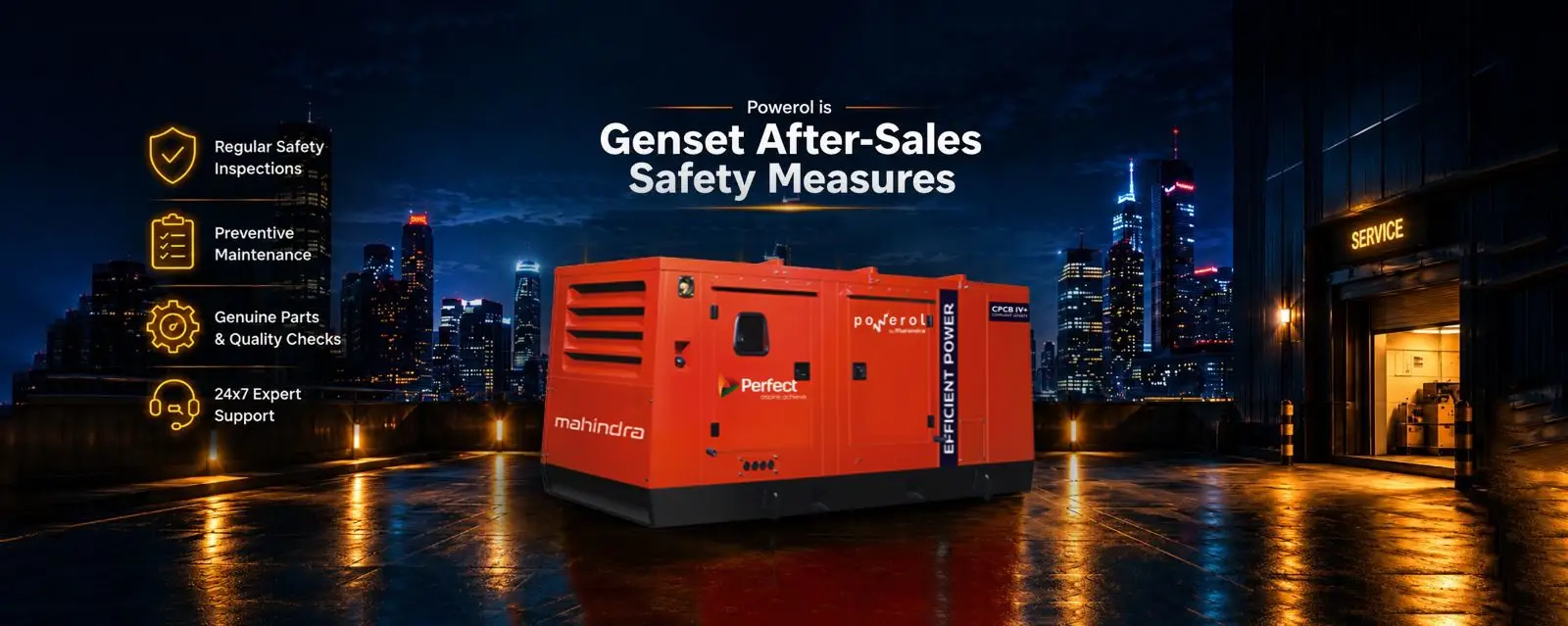
What truly matters is how safely and consistently the generator performs over time. Installing a generator is only the first step in getting backup power. The real value lies in how well and safely it performs throughout its lifecycle. This is where post-sales genset safety measures become critical. Without proper monitoring and maintenance, even the best generator can become a costly liability.
In this blog, we’ll discuss essential after-sales safety measures that help ensure your genset operates efficiently, safely, and without unexpected downtime.
Why After-Sales Safety Matters More Than You Think
Gensets are commonly used in environments where uninterrupted power is crucial, including factories, hospitals, construction sites, commercial buildings, and industrial facilities. Any operational failure can result in safety risks, productivity losses, and significant financial costs.
Effective after-sales safety practices help:
- Prevent unexpected breakdowns
- Extend equipment lifespan
- Ensure compliance with safety regulations
- Protect operators and surrounding infrastructure
Simply put, a well-maintained genset is a reliable genset.
1. Daily Fuel Monitoring: The First Line of Defence
Fuel is the lifeline of every diesel generator. Monitoring fuel levels daily is one of the most important preventive maintenance practices.
- Check diesel levels regularly
- Refill when the tank reaches approximately 30% capacity
- Avoid operating the genset with critically low fuel levels
Running a generator on low fuel can lead to airlocks, operational interruptions, and potential damage to internal engine components.
2. AdBlue (Urea) Monitoring: Ensuring Emission Compliance
Modern CPCB IV+ compliant gensets use AdBlue (Urea) to reduce harmful emissions and meet environmental regulations.
Important safety practices include:
- Checking AdBlue levels daily
- Refilling when levels drop to around 30%
Neglecting AdBlue maintenance may result in:
- Increased emissions
- System warnings and automatic shutdowns
- Non-compliance with environmental standards
3. Coolant Level Checks: Preventing Overheating
Engine overheating is one of the leading causes of genset failure. Routine coolant inspection is essential for reliable operation.
- Monitor radiator coolant levels regularly
- Inform the service team if coolant levels fall below recommended limits
Low coolant levels can cause:
- Engine overheating
- Damage to critical engine components
- Complete system shutdown
4. Leak Detection: Small Issues Can Become Major Problems
Even minor leaks can escalate into costly repairs and safety hazards if left unattended.
Operators should:
- Inspect the genset daily for fuel, oil, and coolant leaks
- Report and resolve any leaks immediately
Ignoring leaks can lead to:
- Fire hazards
- Environmental contamination
- Reduced operational efficiency
A simple daily inspection can save thousands of rupees in future repair costs.
5. Lubrication Oil Inspection: Protecting Engine Health
Lubrication oil reduces friction and ensures smooth engine operation.
Best practices include:
- Checking lube oil levels regularly
- Informing technicians when oil levels begin to decrease significantly
Insufficient lubrication can result in:
- Increased wear and tear
- Engine seizure
- Expensive repairs and downtime
6. Scheduled Maintenance: Prevention Is Better Than Repair
After-sales support is not just about fixing problems—it is about preventing them before they occur.
A proper maintenance schedule should include:
- Routine servicing
- Filter replacement
- Battery inspection and testing
- Load testing and performance evaluation
Regular maintenance helps ensure your genset performs efficiently, even during peak power demands.
7. Operator Awareness: The Human Element of Safety
The operator plays a crucial role in maintaining genset safety and performance.
Operators should:
- Follow standard operating procedures
- Conduct routine inspections
- Report unusual noises, warnings, or performance issues immediately
Awareness and timely action are often the first steps in preventing major accidents and equipment failures.
8. Maintaining a Clean and Safe Operating Environment
Dust, debris, and poor ventilation can negatively impact genset performance and safety.
Best practices include:
- Keeping the genset area clean and organized
- Ensuring proper airflow and ventilation
- Removing clutter and obstructions around the equipment
A clean environment contributes to safer operation, improved efficiency, and longer equipment life.
Safety Is Not an Option—It Is a Necessity
Purchasing a genset is a smart investment, but ensuring its safe and reliable operation is what truly maximizes its value. Post-sales safety measures are not simply routine tasks—they are essential practices that protect your investment, employees, and business operations.
From daily fuel checks and coolant monitoring to preventive maintenance and operator training, every action contributes to uninterrupted and dependable power generation.
If you view your genset as a long-term asset rather than a short-term backup solution, these safety measures will ensure it remains reliable whenever you need it most.